
IELTS Preparation Guide: Your Complete Roadmap to Achieving Band 7+
IELTS preparation is the first step for every Pakistani student dreaming of studying or migrating abroad.

Every year, hundreds of thousands of students and professionals from Pakistan take the IELTS exam hoping to study abroad, migrate to Canada or Australia, or advance their careers. Most of them prepare for weeks — yet many fall short of their target band score. “Successful IELTS preparation requires consistent daily practice…”Why? Because preparation without the right strategy wastes both time and money.
This guide cuts through the noise. Whether you are starting from scratch or retaking the test, you will find practical, step-by-step guidance here — covering all four sections, study plans, free resources, and the most common mistakes that cost people their target score.
Let us get started.
What Is IELTS and Why Does It Matter?
Understanding the IELTS Exam
IELTS stands for International English Language Testing System. It is a globally recognized English proficiency exam accepted by over 11,000 organizations across 140 countries, including universities, immigration departments, employers, and professional bodies.
There are two versions of the test:
- IELTS Academic — for students applying to undergraduate or postgraduate programs abroad
- IELTS General Training — for those applying for work visas, immigration, or secondary education
Both versions test the same four skills: Listening, Reading, Writing, and Speaking. The key difference is in the Reading and Writing sections, which are more task-specific depending on the version.
Who Needs IELTS?
In Pakistan, IELTS has become a standard requirement for:
- Students applying to universities in Canada, Australia, the UK, Germany, and New Zealand
- Professionals applying for skilled migration visas under programs like Canada’s Express Entry or Australia’s Skilled Independent Visa
- Nurses, doctors, and engineers seeking international licensing
- Anyone applying for a Spouse or Family visa in the UK or Australia
A Band 6.5 or 7.0 is typically the minimum requirement for most universities and immigration programs. Some top universities and specific visa categories require Band 7.5 or higher.

IELTS Band Score Explained: What Do the Numbers Mean?
The 9-Band Scale
IELTS scores range from 0 to 9, with each band reflecting a level of English competence. Your overall band is the average of your four section scores, rounded to the nearest 0.5.
| Band Score | Level | Description |
| 9.0 | Expert User | Full command of the language |
| 8.0 – 8.5 | Very Good User | Occasional inaccuracies only |
| 7.0 – 7.5 | Good User | Handles complex language well |
| 6.0 – 6.5 | Competent User | Generally effective command |
| 5.0 – 5.5 | Modest User | Partial command, frequent errors |
| Below 5.0 | Limited User | Basic communication only |
What Band Score Do You Need?
Your target band depends on your goal. Here is a quick reference:
- Canadian Express Entry (Federal Skilled Worker): CLB 7 — equivalent to IELTS 6.0 in each section
- Australian Skilled Visa (subclass 189/190): Typically Band 6.0 to 7.0
- UK universities (postgraduate): Usually Band 6.5 overall
- Top-ranked universities (QS Top 100): Often Band 7.0 or above
Breaking Down the Four IELTS Sections
Section 1: Listening (30 minutes + 10 minutes transfer)
The Listening test has 40 questions across four recordings. The recordings move from everyday social situations to more academic content. Once a recording plays, it does not repeat — so concentration is everything.”Successful IELTS preparation requires consistent daily practice…”
Key tips for Listening:
- Read the questions before the audio starts — you get a brief preview time
- Write exactly what you hear; do not change singular to plural
- Spelling errors count as wrong answers
- Practice with different accents: British, Australian, American, and Canadian
Section 2: Reading (60 minutes)
The Academic Reading test contains three long passages totaling around 2,500 words. You face 40 questions and must manage your time carefully — roughly 20 minutes per passage.
The question types include True/False/Not Given, matching headings, sentence completion, and multiple choice. Many test-takers lose marks on True/False/Not Given because they confuse ‘False’ with ‘Not Given.’
- False means the passage directly contradicts the statement
- Not Given means the information is simply absent from the passage
For General Training Reading, the passages are shorter and more practical, drawn from advertisements, workplace documents, and everyday texts.”Successful IELTS preparation requires consistent daily practice…”
Section 3: Writing (60 minutes)
Writing is where most Pakistani candidates struggle most. The section has two tasks:
- Task 1 (Academic): Describe a graph, chart, diagram, or map in at least 150 words
- Task 1 (General Training): Write a formal or informal letter in at least 150 words
- Task 2 (Both versions): Write a 250-word essay responding to an argument or opinion
Task 2 carries double the marks of Task 1, so always attempt it first if you are running short on time. The four scoring criteria are: Task Achievement, Coherence and Cohesion, Lexical Resource, and Grammatical Range and Accuracy — each weighted equally.
Section 4: Speaking (11 to 14 minutes)
The Speaking test is a face-to-face interview with a certified IELTS examiner. It has three parts:
- Part 1: Introduction and everyday questions (4 to 5 minutes)
- Part 2: Cue card — speak for 2 minutes on a given topic after 1 minute of preparation
- Part 3: Extended discussion on abstract topics related to Part 2 (4 to 5 minutes)
You are assessed on Fluency and Coherence, Lexical Resource, Grammatical Range and Accuracy, and Pronunciation. A common mistake is memorizing scripted answers — examiners are trained to detect this, and it will lower your score.”Successful IELTS preparation requires consistent daily practice…”
How to Create an Effective IELTS Study Plan
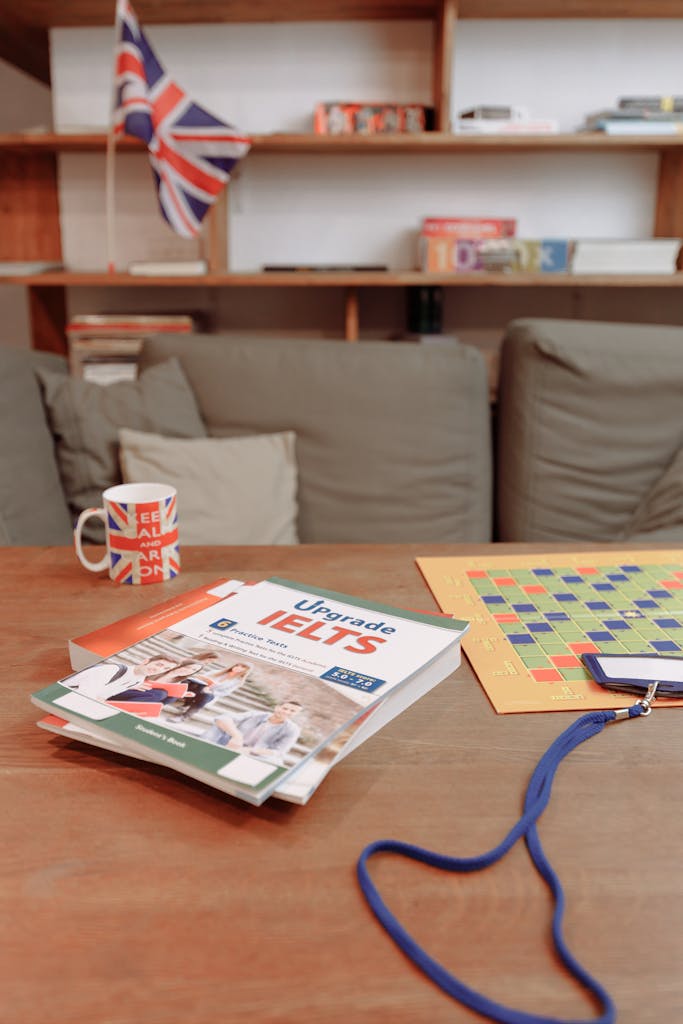
Assessing Your Starting Point
Before building a study plan, take a full practice test under timed,”Successful IELTS preparation requires consistent daily practice…” exam-like conditions. This gives you a realistic picture of where you stand today and which sections need the most attention.
Most candidates need between 8 and 20 weeks to improve by one full band score. The timeline depends on:
- Your current English level
- How many hours you can study per day
- Whether you are working or studying alongside your preparation
A 12-Week Study Plan Outline
| Weeks | Focus Area | Daily Hours |
| 1 – 2 | Diagnostic test, identify weak areas, build vocabulary routine | 1.5 hrs |
| 3 – 4 | Listening practice, Reading strategies (skimming and scanning) | 2 hrs |
| 5 – 6 | Writing Task 1 structure, graph and letter writing | 2 hrs |
| 7 – 8 | Writing Task 2 essay types, argument development | 2.5 hrs |
| 9 – 10 | Speaking practice, cue card responses, fluency building | 2 hrs |
| 11 | Full mock tests, review errors, refine weak areas | 3 hrs |
| 12 | Light revision, final mock test, rest before exam day | 1.5 hrs |
Consistency beats intensity. Studying 90 minutes daily for 12 weeks is far more effective than cramming for two weeks before the exam.
Free and Paid IELTS Resources Worth Using
Official and Free Resources
The British Council, IDP, and Cambridge all offer free IELTS preparation materials. These are the most reliable because they come directly from the test creators. Key free resources include:
- IELTS.org — official sample questions and practice tests
- British Council LearnEnglish — grammar, vocabulary, and skills practice
- IELTS Liz (ieltsliz.com) — highly practical tips, especially for Writing and Speaking
- E2 IELTS on YouTube — free video lessons covering all four sections
- Cambridge IELTS Practice Tests (Books 1 to 18) — available in most bookshops in Pakistan
Recommended Paid Resources
If you want structured guidance, these paid options offer strong value:
- Magoosh IELTS — affordable online course with video lessons and practice questions
- The Official Cambridge Guide to IELTS — comprehensive book with CD/audio for all sections
- Target Band 7 by Simone Braverman — focused on strategies rather than just practice
In Pakistan, coaching centers in Lahore, Karachi, and Islamabad also”Successful IELTS preparation requires consistent daily practice…” offer structured IELTS preparation courses ranging from three to eight weeks. These are useful if you struggle with self-discipline or need Speaking practice with feedback.
Common IELTS Mistakes and How to Avoid Them
Mistakes in Writing
- Writing Task 2 first and running out of time for Task 1 — always allocate 20 minutes for Task 1 and 40 for Task 2
- Repeating the same vocabulary throughout the essay — examiners reward lexical range
- Writing overly complex sentences that become grammatically incorrect — accuracy matters more than complexity
- Not directly answering the question — always read the question carefully and stay on topic
- Using informal language like contractions (don’t, can’t) in Academic Writing Task 2
Mistakes in Speaking
- Giving very short answers in Part 1 — aim for two to three sentences per response
- Memorizing model answers — this is detectable and penalized
- Stopping mid-sentence because of vocabulary gaps — paraphrase rather than go silent
- Speaking too fast out of nervousness — clarity and natural pace score better than speed”Successful IELTS preparation requires consistent daily practice…”
Mistakes in Reading and Listening
- Not reading the instructions carefully — some questions say ‘no more than two words’
- Spending too long on one Reading question — move on and return if time allows
- Writing answers in pencil too lightly in Listening — ensure your answers are clear on the answer sheet
IELTS Exam Day: What to Expect
Before the Exam
Arrive at the test center at least 30 minutes early. Bring your original CNIC or passport — the same document you used during registration. Phones, bags, and other personal items are stored before you enter the exam room.”Successful IELTS preparation requires consistent daily practice…”
The Listening, Reading, and Writing sections are completed in one sitting, usually in the morning. The Speaking test may be on the same day or within a few days before or after, depending on your center.
On the Day of the Test
- Stay calm during Listening — if you miss an answer, move forward and focus on the next one
- In Reading, use skimming and scanning rather than reading every word
- In Writing, leave three to five minutes at the end to proofread
- In Speaking, listen carefully to what the examiner asks before responding
Results are available online 13 days after the test for computer-delivered IELTS, and 13 to 14 days for paper-based tests. You can request a re-mark (Enquiry on Results) within six weeks if you believe your score was unfair.
Frequently Asked Questions About IELTS
How long is an IELTS score valid?
IELTS scores are valid for two years from the date of your test. After two years, most institutions and immigration authorities will not accept your results, and you will need to retake the exam.
How many times can I take IELTS?
There is no limit on how many times you can take IELTS. You can register for the exam as often as you like. However, it is recommended to wait at least four to six weeks between attempts to allow time for focused improvement.
Is IELTS harder than TOEFL?
Neither test is objectively harder — it depends on your strengths. IELTS uses a face-to-face Speaking interview and tests British and international accents in Listening. TOEFL is entirely computer-based and uses American English. Pakistanis who are more comfortable with British accents often find IELTS more natural.
Can I prepare for IELTS in one month?
One month is sufficient if your current English level is already strong — around Band 5.5 or above. If you are starting from a lower level, one month will not be enough for significant improvement. A realistic preparation period for most candidates is two to four months.
What is the IELTS fee in Pakistan?
The IELTS exam fee in Pakistan is approximately PKR 37,000 to 40,000, depending on the test type and center. Fees may vary slightly between the British Council and IDP centers. Always confirm the current fee directly on their official websites before registering.

Final Thoughts: Your Path to IELTS Success
IELTS is not a test of your intelligence — it is a test of your English communication skills combined with exam strategy. Students who score Band 7 and above are not necessarily more intelligent than those who score 6.0; they simply prepare smarter, practice more consistently, and understand what the examiners are looking for.
Start with an honest assessment of where you are today. Build a consistent study plan. Focus extra attention on Writing and Speaking, since these are the sections where most Pakistani candidates leave marks behind. Use authentic practice materials from Cambridge and the official IELTS websites.
Most importantly, give yourself enough time. Rushing your preparation is the single biggest mistake you can make. With the right approach and genuine consistency, Band 7 is an achievable goal — not a distant dream.
Ready to start your IELTS journey? Explore more career and education guides at CareerEducationHub.online