
Energy Efficient HVAC Systems: A Complete Engineering Guide
Heating and cooling usually account for the single largest share of a building’s energy bill, often outweighing lighting, electronics, and everything else combined. For property owners watching utility costs creep up year after year, energy efficient HVAC systems aren’t a luxury anymore.They’re one of the most direct,”energy efficient HVAC systems” measurable ways to control operating expenses without sacrificing comfort.
Yet most buildings, whether a small office or a sprawling commercial complex, are still running on equipment that was installed rather than engineered. The gap between a standard HVAC setup and a properly designed one can mean thousands of dollars wasted every year, or a system that pays for its own upgrades within a few cooling seasons.
This guide breaks down what energy efficient HVAC systems actually look like in practice, the engineering decisions behind them, the technologies driving real savings today, and how to figure out whether your building needs an audit, a retrofit, or a full redesign.
It’s worth saying upfront that efficiency isn’t a one-time purchase. It’s an ongoing relationship between equipment, building structure, and how a space is actually used day to day. Understanding that relationship is what separates a system that performs well for fifteen years from one that disappoints within the first two.
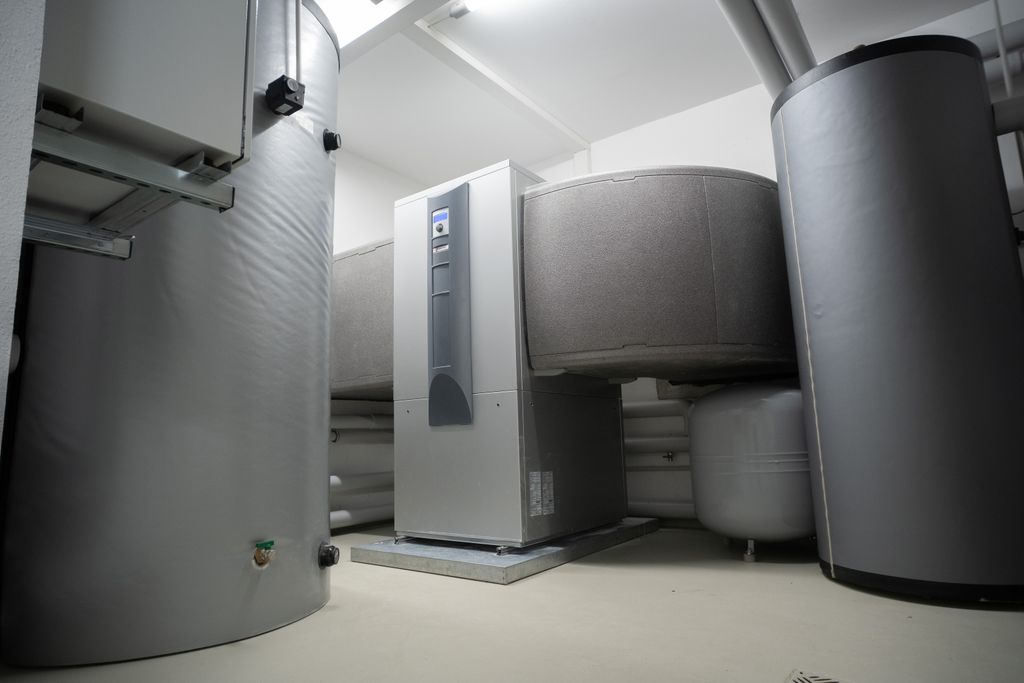
What Makes an HVAC System “Energy Efficient”?
Quick answer: An energy efficient HVAC system is engineered to deliver the right amount of heating, cooling, and ventilation using the least amount of energy possible, without compromising indoor air quality or comfort. It’s the result of correct sizing, smart controls, and a building envelope that doesn’t fight the system.
Efficiency isn’t just about the equipment label on the unit. A high-SEER air conditioner installed in the wrong size, in the wrong location, with leaky ductwork, will still underperform. True efficiency comes from how the entire system works together.
It’s also worth separating two terms that often get blurred together: efficiency and capacity. Capacity describes how much heating or cooling a system can produce. Efficiency describes how much energy it uses to produce that output. A larger unit isn’t automatically a more efficient one, and in many real-world cases, the opposite turns out to be true.
Energy Efficiency vs. Standard HVAC Installation
A standard installation typically follows rule-of-thumb sizing. A technician estimates square footage, picks a unit that “should work,” and moves on. It’s fast and it’s common, but it rarely accounts for insulation quality, window orientation, occupancy patterns, or local climate data.
Engineered HVAC design starts from the opposite direction. It begins with detailed load calculations, examines how the building actually behaves throughout the day, and only then selects equipment sized to match real demand. The result is a system that runs longer, gentler cycles instead of short,”energy efficient HVAC systems” energy-hungry bursts.
Why the Difference Shows Up on Your Utility Bill
Oversized equipment cools or heats a space quickly, then shuts off, then kicks back on minutes later. This short-cycling pattern wastes energy on startup surges and never gives the system time to properly dehumidify or stabilize temperature.
Undersized equipment has the opposite problem. It runs constantly, struggling to keep up, which drives up both energy use and wear on components. Either mistake quietly inflates monthly bills long after the installation invoice is paid.
Core Engineering Principles Behind Efficient HVAC Design
Good HVAC engineering rests on a handful of principles that rarely change, even as the technology around them evolves. Getting these fundamentals right matters more than any single piece of equipment.
Accurate Load Calculations Come First
Every efficient HVAC project begins with a load calculation, typically following Manual J or an equivalent standard for the building type. This process accounts for square footage, ceiling height, insulation values, window placement, local climate data, and even how many people regularly occupy the space.
Skipping this step is the single most common reason HVAC systems underperform. Engineers who take load calculations seriously can often reduce equipment size by 20 to 30 percent compared to rule-of-thumb estimates, which translates directly into lower energy consumption.
This isn’t a one-time calculation either. Buildings change over time through renovations, added equipment, or shifts in occupancy, and load calculations should be revisited whenever a major change occurs rather than assumed to stay accurate indefinitely.
Zoning, Insulation, and the Building Envelope
An HVAC system is only as efficient as the building around it. Poor insulation, air leaks around doors and windows, and uninsulated ductwork force equipment to work harder than necessary, regardless of how advanced that equipment is.
Zoning divides a building into sections that are heated or cooled independently based on actual use. A conference room used twice a week shouldn’t be conditioned at the same rate as a lobby that sees traffic all day. Smart zoning, paired with a tight building envelope, often delivers savings before a single mechanical upgrade is even considered.
It’s easy to overlook how much the building envelope influences HVAC performance, mainly because insulation and air sealing aren’t visible once construction is finished. A wall with proper insulation and minimal air leakage can reduce heating and cooling loads enough to justify a smaller, less expensive system from the very start of a project.
Technologies That Are Redefining HVAC Efficiency
The last decade has brought genuine advances in HVAC technology, not just marketing labels. A few stand out for the measurable difference they make in real buildings.
Variable Refrigerant Flow (VRF) and Variable Speed Systems
Traditional HVAC equipment runs at one speed: full on or fully off. Variable refrigerant flow and variable speed compressors adjust output continuously, matching exactly what the space needs at any given moment.
This matters because most of a building’s heating and cooling demand sits well below peak capacity for the majority of the day. A system that can scale down to 30 or 40 percent output, instead of cycling on and off at full power, “energy efficient HVAC systems”uses noticeably less energy while maintaining steadier temperatures.
Smart Thermostats and Building Automation Systems
Smart thermostats have moved well past simple scheduling. Modern systems learn occupancy patterns, adjust automatically for outdoor weather shifts, and can be managed remotely across multiple zones or properties.
For larger commercial buildings, building automation systems go a step further, coordinating HVAC with lighting, occupancy sensors, and even time-of-use electricity pricing. The savings compound when these systems talk to each other instead of operating in isolation.
Heat Pumps and Dual-Fuel Configurations
Heat pumps have become one of the more practical efficiency upgrades available, since a single piece of equipment handles both heating and cooling rather than relying on separate systems. In moderate climates, a heat pump alone can move heat in or out of a building far more efficiently than electric resistance heating or an aging furnace. The technology has also improved enough in recent years that cold-climate heat pumps now perform reliably even in regions that were previously considered unsuitable for them.
In colder regions, dual-fuel setups pair a heat pump with a gas furnace as backup. The heat pump handles milder days, when it operates most efficiently, while the furnace kicks in only during the coldest stretches of winter. This combination often delivers the best of both worlds: lower energy bills most of the year and reliable backup when temperatures drop sharply.
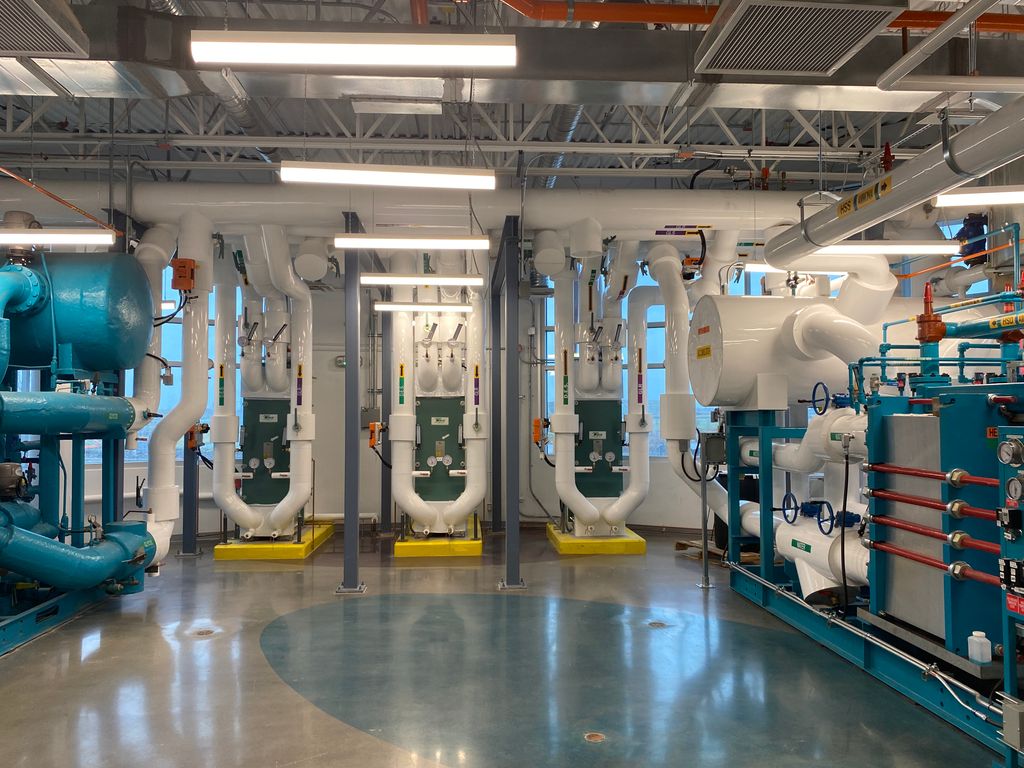
The HVAC Energy Audit: Where Real Savings Are Found
Before investing in new equipment, a proper energy audit identifies exactly where a building is losing efficiency. Skipping this step often means spending money on upgrades that don’t address the actual problem.
What an Energy Audit Actually Involves
A professional HVAC energy audit typically includes a review of utility bills over the past year, a physical inspection of equipment and ductwork, blower door testing to measure air leakage, and thermal imaging to spot insulation gaps that aren’t visible to the naked eye.
The output isn’t just a list of problems. A good audit ranks issues by cost impact, so building owners can prioritize fixes with the fastest return rather than tackling everything at once.
Most audits also include a comparison against similar buildings of the same size and type, sometimes called benchmarking. This context matters “energy efficient HVAC systems”because a building that seems “normal” in isolation might actually be using twice the energy of comparable properties nearby, simply because no one had a reference point to notice the gap.According to ENERGY STAR, HVAC systems account for a major share of total home energy use in most climates, which is why even small efficiency improvements can produce noticeable savings on utility bills.
Warning Signs That Indicate Hidden Energy Loss
Certain patterns tend to show up again and again in inefficient buildings. Rooms that are noticeably warmer or colder than the rest of the building often point to duct or insulation problems. Equipment that runs almost constantly, even in mild weather, usually signals sizing or airflow issues.
Unusually high humidity indoors, combined with normal temperature readings, frequently points to a system that’s oversized “energy efficient HVAC systems”and short-cycling rather than running long enough to properly dehumidify the air.
Retrofitting vs. Replacing: Making the Right Call
Not every inefficient HVAC system needs to be torn out. In many cases, targeted retrofits deliver most of the savings of a full replacement at a fraction of the cost.
When a Retrofit Makes More Financial Sense
If the core equipment is less than ten to twelve years old and mechanically sound, a retrofit is usually the smarter financial move. Sealing ductwork, upgrading controls, adding zoning, and improving insulation can dramatically improve performance without replacing compressors or air handlers that still have years of useful life left.
Full replacement becomes the better option when equipment is near or past its expected lifespan, when refrigerant type is being phased out,“energy efficient HVAC systems” or when the building’s use has changed significantly since the system was originally installed.
There’s also a middle path worth considering: a phased approach, where the most impactful retrofits happen now and full replacement is scheduled for a future budget cycle once the existing equipment genuinely reaches end of life. This spreads cost over time while still capturing meaningful savings sooner rather than later.
Retrofit Upgrades With the Fastest Payback
Duct sealing consistently ranks among the highest-return retrofits, since leaky ducts can waste a substantial portion of conditioned air before it ever reaches a room. Programmable and smart thermostat upgrades follow closely behind, often paying for themselves within a single year through better scheduling alone.
Variable frequency drives on existing fan motors, along with economizer upgrades that bring in free outdoor air during mild weather, round out the list of retrofits that tend to pay back quickly without requiring a full system overhaul.
Lighting and occupancy sensor upgrades, while not strictly HVAC components, often get bundled into the same retrofit project because they reduce internal heat gain.“energy efficient HVAC systems” Fewer heat-generating light fixtures means less cooling load during warm months, which is a small but real contributor to overall energy savings.
Common Mistakes That Quietly Drain HVAC Efficiency
Even well-designed systems lose efficiency over time if a few common mistakes go unaddressed. None of these require expensive equipment to fix, but all of them are easy to overlook.
Skipping Routine Maintenance
A neglected air filter, dirty coils, or low refrigerant charge can quietly increase energy use by a meaningful percentage long before anyone notices a problem. Routine maintenance isn’t glamorous,“energy efficient HVAC systems” but it’s consistently one of the cheapest ways to protect efficiency.
Buildings that follow a structured maintenance schedule tend to see fewer emergency repairs and significantly longer equipment lifespans compared to those operating on a reactive, fix-it-when-it-breaks basis.
Ignoring Ductwork and Airflow Issues
Ductwork hidden above ceilings or behind walls is easy to forget about, which is exactly why it causes so much waste. Leaks, poor insulation, and incorrect sizing in ducts can undermine even the most efficient equipment.
Airflow imbalances, where some rooms get too much conditioned air and others too little, are another frequently ignored issue. Rebalancing airflow is often a low-cost fix that immediately improves comfort and reduces the urge to override the thermostat manually.
Overlooking Thermostat Placement and Settings
A thermostat mounted near a sunny window, a kitchen, or a drafty hallway will read inaccurate temperatures and cause the system to overcompensate. Relocating a poorly placed thermostat is inexpensive and frequently produces a noticeable improvement in both comfort and energy use.
Aggressive temperature setbacks can also backfire. Pushing a thermostat far below or above the normal setpoint when a space is unoccupied sometimes forces equipment to work harder than necessary to recover, particularly with systems that aren’t designed for rapid temperature swings.

Choosing the Right HVAC Engineering Partner
Equipment and technology only deliver results when the engineering behind them is sound. Choosing the right partner matters as much as choosing the right system.
Questions Worth Asking Before You Hire
Building owners should ask whether load calculations will be performed for the specific project, rather than relying on rule-of-thumb sizing. It’s worth confirming how the firm approaches ductwork inspection, what testing methods they use to verify performance after installation, and whether they provide documented energy savings estimates before work begins”energy efficient HVAC systems”.
A reputable engineering partner will welcome these questions and explain their process clearly, without resorting to vague assurances or pressure tactics. It’s also reasonable to ask for references from past projects similar in scale to yours, along with documented before-and-after energy data when available.
Certifications and Standards That Signal Real Expertise
Look for engineers and firms with relevant certifications, such as those tied to ASHRAE standards, NATE certification for technicians, or LEED accreditation for projects with broader sustainability goals. These credentials don’t guarantee perfect results, but they indicate a baseline level of training and accountability.
Experience with buildings similar in size and use to yours also matters more than general industry reputation alone. A firm skilled in residential retrofits may not be the right fit for a large commercial facility, and the reverse is equally true.
Calculating the Return on Investment for HVAC Upgrades
Efficiency upgrades are easier to justify when the numbers are laid out clearly. Most building owners want to know one thing before approving any project: how long until this pays for itself.
How to Estimate Payback Period
A rough payback estimate starts with comparing current annual energy costs against projected costs after the upgrade, based on audit data or manufacturer performance figures. Dividing the upfront project cost by the annual savings gives a simple payback period in years.
This number ignores financing costs, rebates, and rising utility rates, so it’s a starting point rather than a final answer. Even so, it gives building owners a quick way to compare different upgrade options against each other before committing budget to any single project.
Available Rebates and Incentives
Many utility companies and local governments offer rebates for high-efficiency equipment, smart thermostats, and documented energy audits. These programs change frequently and vary significantly by region,“energy efficient HVAC systems” so it’s worth checking current offerings before finalizing a project budget.
Some incentive programs also reward improvements at the building envelope level, such as insulation upgrades or air sealing, not just HVAC equipment itself. Combining mechanical upgrades with envelope improvements can sometimes unlock larger incentive packages than either approach would qualify for on its own.
Frequently Asked Questions
How much can energy efficient HVAC systems actually save on utility bills? Savings vary by building and climate, but well-engineered systems commonly reduce heating and cooling costs by 15 to 30 percent compared to outdated or improperly sized equipment.
Is it worth retrofitting an old HVAC system instead of replacing it? In many cases, yes. If core equipment is mechanically sound, targeted retrofits like duct sealing and smart controls often deliver strong returns without the cost of full replacement.
How often should a commercial HVAC system be inspected for efficiency? Most engineers recommend a professional inspection at least once a year, with a more detailed energy audit every three to five years or whenever energy bills rise unexpectedly.
Do smart thermostats really make a measurable difference? Yes. Smart thermostats reduce energy waste through better scheduling and occupancy-based adjustments, and they’re typically one of the fastest upgrades to pay for themselves.
What’s the average payback period for HVAC efficiency upgrades? Simple upgrades like duct sealing or smart thermostats often pay back within one to two years. Larger investments, such as full equipment replacement, typically see payback within five to ten years depending on usage and local energy rates.
Does a higher SEER or efficiency rating always mean better performance? Not on its own. A high-efficiency rating only delivers real savings when the equipment is correctly sized and installed in a building with reasonable insulation and sealed ductwork. Pairing a high-efficiency unit with poor installation often produces disappointing results.
Conclusion
Energy efficient HVAC systems aren’t built on a single piece of equipment or a single smart upgrade. They’re the result of accurate engineering, from load calculations and zoning to ductwork integrity and ongoing maintenance, “energy efficient HVAC systems”all working together rather than in isolation.
Whether your building needs a full audit, a handful of targeted retrofits, or a complete redesign depends on its age, condition, and how it’s actually being used day to day. The right next step is rarely guesswork, and the cost of waiting tends to show up quietly on every monthly bill until someone addresses it.
If you’re noticing rising energy bills, uneven temperatures, or equipment that seems to run constantly, it’s worth having a qualified HVAC engineer assess your building before committing to any upgrade. A proper evaluation today can prevent years of wasted energy and unnecessary cost, and it puts the decision in your hands instead of leaving it to guesswork.Engineers entering this field for the first time can also check our guide on getting a job in Pakistan after graduation for practical hiring insights.