
Comprehensive Guide to Artificial Intelligence: 10 Definitions, Courses & Applications
Artificial Intelligence has become a buzzword in today’s fast-evolving technological landscape. This comprehensive guide aims to dissect the concept of Artificial Intelligence, explore its applications, course offerings, and analyze its implications over human intelligence.

Artificial Intelligence
Artificial Intelligence (AI) is an interdisciplinary branch of computer science aimed at creating systems capable of performing tasks that normally require human intelligence. These tasks include learning, reasoning, problem-solving, perception, language understanding, and even social intelligence. This section delves deeper into the artificial intelligence definition, its history, and contemporary relevance.
The Origins of Artificial Intelligence
The concept of AI dates back to ancient history, with myths and legends of artificial beings endowed with intelligence. However, the formal establishment of the field began in the mid-20th century with the inception of digital computers. The Dartmouth Conference in 1956 marks a pivotal point where AI was officially recognized as a legitimate field of study.
The early pioneers, such as Alan Turing and John McCarthy, laid fundamental principles that define artificial intelligence today. Turing’s work led to the Turing Test, a measure of a machine’s ability to exhibit intelligent behavior indistinguishable from that of a human.
Types of Artificial Intelligence
AI is broadly categorized into two types: Narrow AI and General AI.
- Narrow AI: Also known as Weak AI, refers to systems designed and trained for specific tasks such as voice recognition (e.g., Siri), facial recognition, and game playing (e.g., Chess, Go).
- General AI: Also known as Strong AI, denotes a type of AI that possesses the ability to understand, learn, and apply its intellect to solve any problem, much like a human.
This distinction is crucial as it shapes the development trajectory and ethical considerations involved in AI technology.
Current Applications of Artificial Intelligence
Artificial intelligence course

comprehensive AI courses and equip yourself with the
skills needed to thrive in the future of technology.
As the demand for AI expertise grows, various educational institutions and platforms have started offering artificial intelligence courses aimed at equipping learners with the knowledge and skills necessary to succeed in the field.
Types of AI Courses Available
Educators and institutions provide a wide range of AI courses, including:
- Online Courses: Platforms like Coursera, edX, and Udacity offer self-paced courses that can be taken from the comfort of one’s home. These courses often feature renowned instructors and industry professionals who teach the essentials of AI.
- Degree Programs: Many universities offer AI-focused degrees, such as Bachelor’s and Master’s degrees in Computer Science, Data Science, or dedicated AI programs. These typically feature comprehensive curricula covering theory and practical applications.
- Workshops and Bootcamps: For those looking for a more hands-on experience, a workshop or bootcamp may be ideal. These are often short, intense programs focusing on practical skills and real-world projects.
Benefits of Taking an AI Course
Engaging in an “AI” course can significantly enhance your skills and career prospects.
- Career Advancement: With the explosion of AI in various sectors, having a foundational understanding of AI tools and techniques can lead to better job opportunities and promotions.
- Practical Skills: Many courses include project-based learning, enabling students to apply their knowledge in real-world scenarios. This experience is invaluable as it provides context and understanding that theoretical learning may lack.
- Networking Opportunities: By taking courses, learners have the chance to connect with industry professionals and peers in the field, which can lead to potential job opportunities and collaborations.
Artificial intelligence vs human intelligence essay

explore how AI technology is transforming industries
and creating new opportunities for the future.
The comparison between artificial intelligence and human intelligence provides insight into each type’s unique strengths and weaknesses.
Key Differences Between AI and Human Intelligence
One of the major discussions in the “AI”vs human intelligence essay pertains to emotional and social understanding. Humans employ emotions, such as empathy and intuition, in decision-making processes. In contrast, AI systems rely heavily on data and algorithms, which may lack the nuanced understanding of complex human interactions.
Moreover, while humans are capable of learning from a few examples (i.e., one-shot learning), AI typically requires large amounts of data to train efficiently. This distinction highlights the limitations of current AI technology, as there remain areas where human intelligence excels
Areas of Collaboration
While artificial intelligence tackles specific tasks efficiently, human intelligence thrives in creative and strategic facets, such as emotional intelligence. This presents an opportunity for synergy; AI can handle vast datasets and analyses while humans focus on broader strategic decisions informed by creativity and ethical considerations.
Ultimately, the discourse on”AI” vs human intelligence sparks vital questions about ethics and the future of society. Recognizing the strengths and limitations of both allows for a more balanced approach toward integrating these technologies into our lives.
Artificial intelligence meaning in urdu

systems are transforming how we live, work, and learn.
Explore AI courses and be part of the revolution.
For the Urdu-speaking audience, understanding the artificial intelligence meaning can bridge a cultural gap.
Translation and Perception
Moreover, the perception of AI in developing countries can differ significantly from developed nations, primarily due to varying levels of exposure and access to technological advancements.
Cultural Impacts
The discourse surrounding”AI” in Urdu often reflects societal concerns, particularly regarding job security, ethical dilemmas, and the potential for misuse. As AI technologies become commonplace, addressing these issues is crucial for ensuring a beneficial integration into everyday life.
Artificial intelligence vs human intelligence essay class 11
Students studying artificial intelligence in the context of their senior classes (like Class 11) benefit significantly from a structured essay format that discusses AI’s implications for society.
Educational Framework
In an artificial intelligence vs human intelligence essay class 11, framework lays a base for students to explore fundamental differences, collaboration avenues, and societal implications. This exercise sharpens their analytical thinking while providing them with essential research skills.
Students are encouraged to employ critical thinking to assess how AI can complement human skills, rather than replace them entirely.
Benefits of Writing Essays
An essay project on AI offers students the chance to engage deeply with the topic, challenging assumptions and inspiring innovative thinking about technology’s role in shaping the future. Moreover, it encourages discussions on ethics, privacy, and the socio-economic implications of AI in everyday life.
Artificial intelligence app
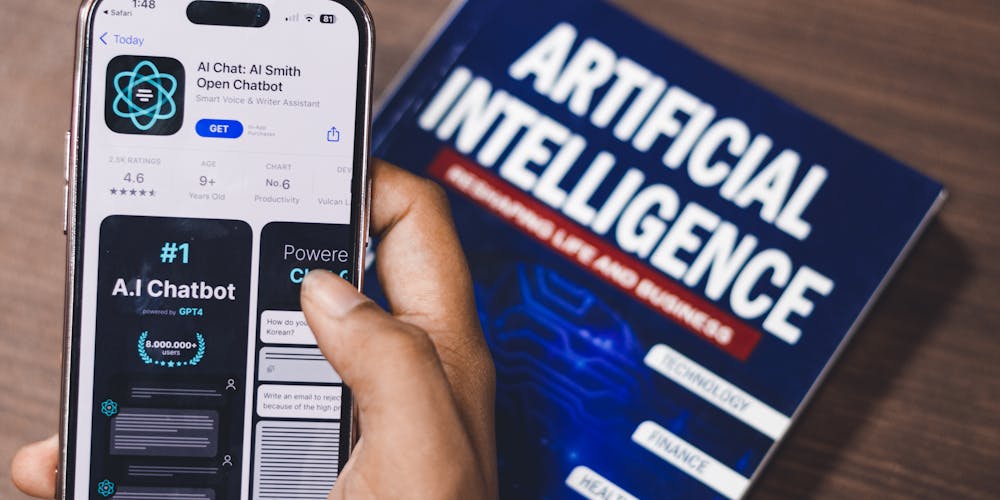
AI fundamentals, explore machine learning, and build
skills that are in high demand across every industry.
The world of artificial intelligence applications has seen a meteoric rise in development, with numerous artificial intelligence apps available, reshaping the way we interact with technology.
Popular AI Applications
- Siri and Google Assistant: Voice-activated AI assistants are designed to facilitate daily tasks, employing natural language processing to understand commands and provide relevant information.
- Chatbots: These AI-driven tools serve as customer service representatives on websites, providing instant responses to queries. They help enhance user experience while minimizing the need for human interaction.
- Recommendation Systems: Services like Netflix and Amazon utilize AI algorithms to analyze user preferences, providing personalized content recommendations that enhance user engagement.
Future of AI Applications
As technology advances, the scope of AI apps is expected to expand further. Innovations in machine learning and deep learning are continually improving the capabilities of “AI” apps, leading to more personalized and efficient services for users across various sectors including education, healthcare, and business.
Artificial intelligence essay

digital connections — explore the world of artificial
intelligence and discover how deep learning is
shaping our future.
An artificial intelligence essay can encompass a wide range of discussions, including ethical dilemmas, tech innovations, and future implications.
Significance of AI
Writing an essay on AI allows for the examination of how this burgeoning field is shaping various aspects of society, from automating mundane tasks to enhancing complex problem-solving in healthcare and finance.
Ethical Considerations
AI essays often delve into the ethical implications of deploying AI in decision-making capacities. Questions concerning privacy, data security, and the potential for bias in algorithms are crucial areas of discussion, guaranteeing responsible AI development and deployment.
Future of AI
The exploration of the future trajectory of AI is critical; as advancements continue, so does the potential for significant societal impacts. Thoughtful essays in this space engage with the dual responsibilities of leveraging AI for positive change while vigilantly guarding against misuse.
Artificial intelligence definition
Understanding the artificial intelligence definition enriches the discourse and enhances comprehension of its relevance in today’s world.
A Deeper Look into AI
Artificial Intelligence denotes any technique or system that mimics human-like cognitive functions. This encompasses various technologies, including machine learning, natural language processing, and robotics.
Layers of AI
The sophistication of AI systems is categorized into three layers:
- Reactive Machines: These systems can perform simple tasks but lack memory capabilities to learn from past experiences.
- Limited Memory: These systems can retain and use past experiences to inform future actions. This is seen in self-driving cars.
- Theory of Mind & Self-aware AI: These advanced layers of AI are still nascent, focusing on understanding emotions and developing awareness, resembling human-like consciousness.
Artificial intelligence a modern approach
Emphasizing AI as a modern approach is vital for understanding its transformative potential in today’s world.
Innovations in AI
Groundbreaking innovations in AI, such as deep learning and neural networks, have significantly accelerated advancements. By mimicking human brain functionality, these methodologies have enabled machines to recognize patterns and learn from vast datasets effectively.
AI in Business
Corporations increasingly adopt AI to enhance operations, automate repetitive processes, and improve decision-making. This shift signifies a transition to more data-driven and efficient business models, promising enhanced productivity and market adaptability.
Ethical and Societal Implications
With the rapid adoption of AI solutions, ethical discussions surrounding accountability and impact become increasingly important. Society must tackle these challenges responsibly, ensuring developments benefit humanity without compromising ethical standards.
Artificial intelligence in urdu
Artificial intelligence in Urdu, or “مصنوعی ذہانت,” emphasizes the importance of making AI knowledge accessible to Urdu-speaking communities.
Cultural Implications
Adapting AI education and resources for Urdu speakers opens new pathways for understanding and skills development. As”AI”becomes integral to various sectors, addressing its implications through a cultural lens enables a more inclusive discourse.
Growth of AI in Pakistan
Increased interest in technology leads to a demand for AI education, translating into opportunities for research, development, and entrepreneurial ventures in Pakistan. This dialogue encourages the cultivation of a local tech ecosystem that embraces innovation.
Contribution to Global Dialogue
As the discourse o”AI”broadens globally, contributions from Urdu-speaking populations enrich the conversation, fostering diversity and promoting collaborative solutions to contemporary challenges and opportunities.
Artificial intelligence scope in pakistan and salary
The scope of artificial intelligence in Pakistan is burgeoning, presenting significant career opportunities for professionals in the field.
Growing Job Market
Recent reports indicate a surge in demand for AI professionals across sectors like IT, healthcare, and finance. Companies recognize that leveraging AI can drive efficiency and economic growth, thereby creating a wealth of job opportunities and career pathways.
Salary Expectations
AI professionals in Pakistan enjoy lucrative salaries, particularly in urban centers like Karachi, Lahore, and Islamabad. Entry-level positions often start from PKR 60,000 to PKR 100,000 per month, but experienced professionals and specialists can earn well above PKR 200,000 per month.
Challenges and Opportunities
Despite the promising outlook, challenges still exist, such as the need for robust educational frameworks to train skilled AI professionals. By investing in education and training initiatives, Pakistan can harness AI’s full potential, contributing to global advancements.
Artificial intelligence using python
Python’s role in artificial intelligence development cannot be understated. As one of the leading programming languages in this domain, its versatility makes it a preferred choice for researchers and developers alike.
Advantages of Python in AI
Python offers a vast ecosystem of libraries and frameworks ideal for AI applications, including:
- TensorFlow and Keras: These libraries facilitate deep learning, enabling users to build and train advanced neural networks.
- Scikit-learn: A library for classical machine learning algorithms, Scikit-learn simplifies implementation and experimentation with various models.
This rich resource eliminates complexity, allowing practitioners to focus on building effective solutions without grappling with the intricacies of programming.
Practical Applications
Python is utilized in a variety of AI domains, including natural language processing, robotics, and computer vision. Developers appreciate its community support and extensive documentation, further incentivizing its use for both academic and industrial projects.
Artificial intelligence meaning
The artificial intelligence meaning encapsulates its essence and distinct roles within technology and society.
Defining AI in Context
At its core, artificial intelligence describes the capability of machines to mimic cognitive functions associated with human minds, such as learning, reasoning, and problem-solving.
The Evolution of AI
The definition of artificial intelligence has transformed over time. Initially focused on rule-based systems, contemporary AI incorporates machine learning and deep learning attributes, progressively shifting towards systems that independently adapt and improve.
Impact on Society
Contemplating”AI”e meaning opens discussions regarding ethical considerations and societal implications. As AI technologies permeate various aspects of daily life, understanding their meaning encourages informed dialogue about governance, fairness, and technological accountability.
Artificial intelligence movie
The fascination surrounding artificial intelligence extends into popular culture, wherein films often explore the nuances and complexities associated with this technology.
Popular AI-themed Movies
Movies such as “Ex Machina,” “Her,” and “Blade Runner” delve into the intersections of AI and humanity. These films not only entertain but also provoke thought, raising ethical questions about consciousness, relationships, and the potential societal impact of AI.
cultural reflections
Artistic portrayals of AI, while fictional, reflect societal anxieties and curiosities regarding technology’s impact. Such narratives urge viewers to grapple with challenges surrounding autonomy, agency, and the moral responsibilities inherent in creating intelligent systems
Artificial intelligence course in pakistan
As Pakistan embraces technological advancements, the availability of artificial intelligence courses has increased, reflecting growing career aspirations in this field.
Types of Courses Available
Several institutions offer AI courses ranging from beginner to advanced levels, including:
- Online platforms: Certifications and courses on platforms like Coursera and Udacity, enabling learners to upskill at their convenience.
- Universities: Select universities have integrated AI modules into computer science and engineering programs.
- Workshops: Tech hubs and accelerators organize periodic workshops that introduce participants to hands-on AI applications.
Future Prospects
The investment in AI education in Pakistan showcases potential growth as it prepares students for emerging roles in tech industries, thereby contributing to the nation’s overall economic development
Artificial intelligence images
Visual representations play a pivotal role in illustrating the complexities of artificial intelligence and its myriad applications
Significance of AI Visualization
Images and infographics serve as effective tools for communicating sophisticated concepts associated with AI. Additionally, they offer visual learning perspectives, making it easier for individuals to grasp intricate ideas and trends.
Sources for AI Images
Various online repositories and platforms provide access to graphics and images focused on artificial intelligence, often highlighting advancements, trends, and applications. Utilizing visually appealing content is crucial for both educational purposes and professional presentations to engage diverse audience
https://careereducationhub.online/
Conclusion
In summary, this comprehensive guide to artificial intelligence elucidates its multifaceted nature, highlighting the evolving landscape of AI education, applications, and implications in comparison to human intelligence. As industries continue to integrate AI technologies, understanding their potential, ethical considerations, and societal impacts is paramount for fostering responsible and informed engagement. The future promises even more opportunities for growth as research, innovation, and collaboration shape our understanding and utilization of artificial intelligence.